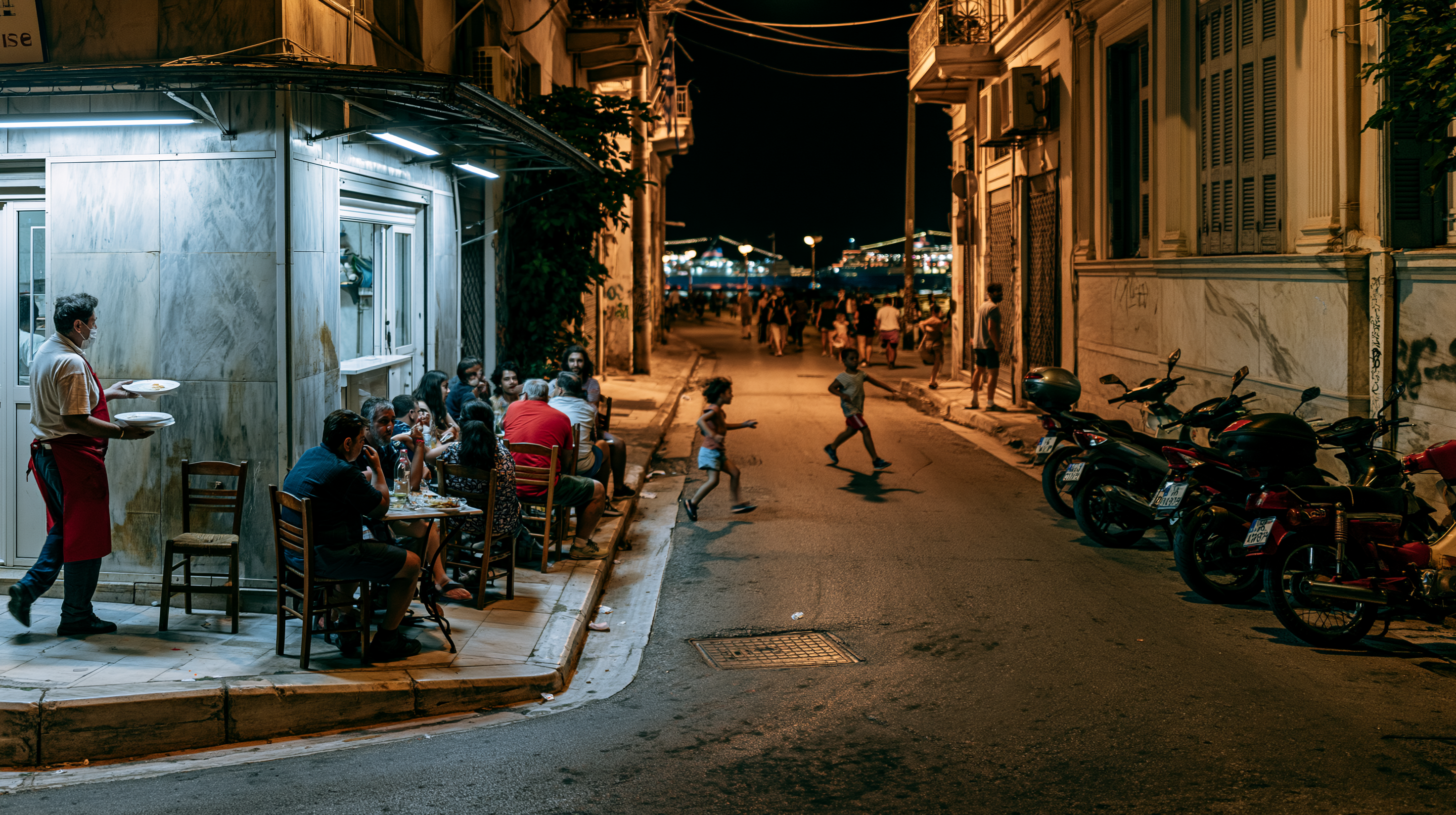
Οι περισσότεροι άνθρωποι που περνούν από τον Πειραιά βρίσκονται καθ’ οδόν προς κάποιον άλλο προορισμό. Γι’ αυτό ακριβώς χτίστηκε. Τα πλοία φορτώνουν και εκφορτώνουν εδώ, τα πλοία προς τα νησιά αποπλέουν για εκατό νησιά, οι επιβάτες αλλάζουν μέσα μεταφοράς μεταξύ αεροδρομίου και λιμανιού χωρίς να σηκώσουν ποτέ πραγματικά το βλέμμα τους. Πες ότι είναι το μεγαλύτερο λιμάνι της Ελλάδας, ένα από τα πιο πολυσύχναστα επιβατικά λιμάνια της Μεσογείου, και έχεις περιγράψει κάτι πραγματικό. Απλώς δεν έχεις περιγράψει την πόλη.
Γιατί ένας τόπος που χτίστηκε για τις αφίξεις καταλήγει να διαμορφώνεται από όλους όσους φτάνουν εκεί. Ναυτικοί, έμποροι, πρόσφυγες, λιμενεργάτες, εφοπλιστές, καλλιτέχνες — όλοι άφησαν κάτι πίσω τους. Μια συνταγή. Ένα κτίριο. Τη συνήθεια να σερβίρουν σε έναν ξένο ένα ποτήρι κρασί πριν τον ρωτήσουν από πού είναι. Ο Πειραιάς φέρει αυτή την πολυεπίπεδη ιστορία με έναν τρόπο που λίγα άλλα μέρη στην Αττική μπορούν να καυχηθούν, και αυτός είναι ο λόγος που η πόλη έχει μια ταυτότητα που αξίζει να συζητηθεί.
Το ερώτημα είναι τι θα συμβεί στη συνέχεια. Όχι αν ο Πειραιάς έχει ένα παρελθόν που αξίζει να θυμόμαστε — προφανώς έχει — αλλά αν τα ίδια ένστικτα που έχτισαν το λιμάνι μπορούν να κατευθυνθούν προς κάτι καινούργιο. Πολιτισμός. Φιλοξενία. Η καθημερινή υφή της αστικής ζωής. Υπάρχει ένα βάσιμο επιχείρημα ότι αυτό βρίσκεται ήδη σε εξέλιξη, και ότι η ολοκλήρωσή του δεν εναπόκειται σε κανέναν συγκεκριμένο θεσμό.
Μια πόλη χτισμένη πάνω στην κίνηση
Όλα όσα αφορούν τον Πειραιά έχουν τις ρίζες τους στο γεγονός ότι δεν μένει ποτέ ακίνητος. Το αρχαίο λιμάνι της Ζέας — η μαρίνα που σήμερα είναι γνωστή ως Πασαλιμάνι — κάποτε φιλοξενούσε τον στόλο των τριηρών που έκανε δυνατή την αθηναϊκή ναυτική δύναμη και, κατ’ επέκταση, έκανε δυνατή και την αθηναϊκή δημοκρατία, αφού οι άνδρες που κωπηλατούσαν σε αυτά τα πλοία ήταν και οι άνδρες που ψήφιζαν. Αυτό δεν είναι απλώς μια παρατήρηση. Είναι η προέλευση της ιδέας ότι αυτό το τμήμα της ακτής είχε πάντα μεγαλύτερη σημασία από ό,τι υποδηλώνει το μέγεθός του.
Η πόλη συνέχισε να απορροφά κόσμο πολύ καιρό μετά την αρχαιότητα. Η εκβιομηχάνιση προσέλκυσε εργάτες από τα νησιά. Η ανταλλαγή πληθυσμών μετά το 1922 έφερε κύματα προσφύγων από τη Μικρά Ασία, οι οποίοι έφεραν μαζί τους τους ήχους και τις γεύσεις που θα διαμόρφωναν το ρεμπέτικο και μεγάλο μέρος αυτού που ακόμα θεωρείται πειραϊκή κουζίνα. Οι εφοπλιστές έχτισαν νεοκλασικές βίλες στον λόφο της Καστέλλας στα τέλη του 19ου αιώνα. Οι λιμενεργάτες και οι μικροί βιομήχανοι διατηρούσαν το λιμάνι σε λειτουργία κάτω από όλα αυτά. Τίποτα από όλα αυτά δεν άφησε στον Πειραιά πολύ περιθώριο να παραμείνει στάσιμος, και αυτό αποδείχθηκε χρήσιμη εκπαίδευση. Μια πόλη που έπρεπε να αναδιαμορφωθεί τόσες φορές αναπτύσσει μια συγκεκριμένη σχέση με τα δικά της εγκαταλελειμμένα κτίρια — δεν γίνεται τόσο συναισθηματική απέναντί τους, όσο αρχίζει να αναρωτιέται τι θα μπορούσαν να γίνουν.
Αυτό είναι το ένστικτο που κυριαρχεί αυτή τη στιγμή. Ένα παλιό κλωστοϋφαντουργείο, μια εγκαταλελειμμένη αποθήκη, ένα σιλό σιτηρών που έχει βγει εκτός λειτουργίας — στον Πειραιά, αυτά δεν μοιάζουν τόσο με λείψανα, όσο με ημιτελείς προτάσεις. Το βιομηχανικό παρελθόν δεν είναι κάτι για το οποίο πρέπει να θρηνούμε εδώ. Είναι πρώτη ύλη.
Γιατί τώρα
Η ορμή σπανίως εμφανίζεται ξαφνικά. Εμφανίζεται ως μια σειρά ασύνδετων εξελίξεων, και μόνο αργότερα γίνεται εμφανές το μοτίβο. Στον Πειραιά, έχουν συσσωρευτεί τόσες πολλές από αυτές τις εξελίξεις, που το μοτίβο είναι δύσκολο να περάσει απαρατήρητο.
Ας ξεκινήσουμε από το πόσο πιο εύκολη έχει γίνει η πρόσβαση στην πόλη. Η επέκταση της γραμμής 3 του μετρό συνδέει πλέον το κέντρο του Πειραιά απευθείας με το Διεθνές Αεροδρόμιο της Αθήνας, με έναν νέο σταθμό που χτίστηκε ειδικά για να εξυπηρετεί το Δημοτικό Θέατρο. Το αεροδρόμιο απέχει περίπου 55 λεπτά, σε μια διαδρομή με λιγότερες στάσεις από πριν, και αυτό έχει μειώσει αθόρυβα την ψυχολογική απόσταση μεταξύ του Πειραιά και της πρωτεύουσας. Μια πόλη στην οποία οι άνθρωποι μπορούν να φτάσουν εύκολα είναι μια πόλη που αρχίζουν να επιλέγουν.
Στη συνέχεια, υπάρχει και το τι συμβαίνει στα ίδια τα παλιά κτίρια. Μια αποθήκη του 19ου αιώνα κοντά στην οδό Κάστωρος έχει μετατραπεί σε έναν ευέλικτο χώρο για εκθέσεις και παραστάσεις, με την αρχική της τοιχοποιία να παραμένει ορατή αντί να καλυφθεί, και τα σφραγισμένα παράθυρά της να έχουν ξανανοίξει για να αφήνουν το φως να εισέλθει ξανά — το κτίριο αντιμετωπίζεται ως κάτι που πρέπει να συνεχίσει να χρησιμοποιείται, όχι να συντηρείται πίσω από γυαλί. Λίγο πιο πέρα, το εγκαταλελειμμένο καπνοβιομηχανείο Κεράνης, που κάποτε αποτελούσε πυλώνα της βιομηχανικής οικονομίας της πόλης, μετατρέπεται σε χώρο κατοικιών και εστίασης, με την παλιά επιγραφή στην οροφή να διατηρείται σκόπιμα ανέπαφη. Η έναρξη των εργασιών έχει προγραμματιστεί για τις αρχές του 2026, ενώ η ολοκλήρωσή τους προβλέπεται για τα τέλη του 2027.
Και η παραλιακή ζώνη αλλάζει. Ο παραλιακός δρόμος του Μικρολιμανιού — που για χρόνια χαρακτηριζόταν από τον κύκλο των ταβερνών με θαλασσινά — έχει ανακατασκευαστεί σε έκταση περίπου 15.600 τετραγωνικών μέτρων, με την προσθήκη χώρων πρασίνου και τον καθαρισμό των υδάτων κατά μήκος της διαδρομής. Σε μικρή απόσταση με τα πόδια από εκεί, το SILO, μια αποθήκη σιτηρών που παρέμενε κενή για δεκαετίες μετά την κατασκευή της τη δεκαετία του 1930, μετατρέπεται σε Μουσείο Υποβρύχιων Αρχαιοτήτων που εκτείνεται σε περισσότερα από 13.000 τετραγωνικά μέτρα. Το συμβούλιο μουσείων του Υπουργείου Πολιτισμού έχει ήδη εγκρίνει τις προκαταρκτικές μελέτες, και το κτίριο θα φιλοξενήσει εκθεσιακούς χώρους καθώς και αίθουσες για εκπαίδευση και έρευνα, με την ναυτική ιστορία της Ελλάδας και τη θαλάσσια ζωή να έχουν την ίδια βαρύτητα με την αρχαιολογία.
Δύο μεγαλύτερα έργα καταδεικνύουν πόση εμπιστοσύνη αποδίδεται ειδικά στο πολιτιστικό μέλλον της πόλης. Το γραφείο του Ρένζο Πιάνο σχεδιάζει το KYKLOS, ένα νέο κέντρο σύγχρονης τέχνης που ανατέθηκε από το Ίδρυμα Ντίνος και Λία Μαρτίνου, χτισμένο γύρω από εκθεσιακούς χώρους που συνυφαίνονται με μεσογειακούς κήπους — περισσότερο από το ήμισυ του χώρου είναι φυτεμένο, σκόπιμα, για να επιβραδύνει το βήμα των επισκεπτών αντί να τους οδηγεί γρήγορα από το ένα σημείο στο άλλο. Κατά μήκος του κόλπου του Φαλήρου, σχεδιάζεται το πάρκο AENAON σε έκταση 133 εκταρίων, το οποίο αναμένεται να ανοίξει το 2028 και παρουσιάζεται ως το μεγαλύτερο έργο αστικής αναγέννησης που έχει δει η Αττική, με πισίνες, χώρους αναψυχής και πολιτιστικούς χώρους που εκτείνονται κατά μήκος της ακτής.
Τίποτα από όλα αυτά δεν είναι ξεχωριστό από τον τρόπο με τον οποίο οι άνθρωποι ζουν και ασκούν τις επιχειρηματικές τους δραστηριότητες εδώ. Το έργο «Piraeus Gate» μετατρέπει μια έκταση εγκαταλελειμμένων γηπέδων της κλωστοϋφαντουργίας σε περίπου 105.000 τετραγωνικά μέτρα κατοικιών, καταστημάτων, καφέ και κοινόχρηστων χώρων, με τον δηλωμένο στόχο να δημιουργηθεί μια πραγματική γειτονιά και όχι απλώς ένα ακόμη οικιστικό συγκρότημα. Ο κόσμος το έχει παρατηρήσει: οι τιμές των ακινήτων στην πόλη αυξήθηκαν κατά περίπου 28% μόνο μεταξύ του 2024 και του 2025, ενώ προβλέπεται ετήσια αύξηση 4 έως 6% μέχρι το 2029.
Και πίσω από όλα αυτά τα μεγάλα έργα, συμβαίνουν μικρότερα πράγματα που δεν εμφανίζονται στις εκθέσεις για την αγορά ακινήτων. Ένας συνεργατικός εκθεσιακός χώρος που δημιουργήθηκε με βάση την κοινή πρακτική και όχι το όνομα ενός μεμονωμένου καλλιτέχνη. Ένα έργο πολλαπλών χώρων μέσα σε ένα βιομηχανικό κτίριο του 19ου αιώνα, που φιλοξενεί εκθέσεις σχεδιασμού και αρχιτεκτονικής. Μια νέα γκαλερί που παρουσιάζει τη διεθνή σύγχρονη τέχνη στο τοπικό κοινό, το οποίο διαφορετικά ίσως δεν θα είχε την ευκαιρία να τη δει. Αυτό είναι το κομμάτι της ιστορίας που δεν χρηματοδοτείται από κάποιο ίδρυμα ή κάποιον κατασκευαστή — είναι απλώς άνθρωποι που αποφάσισαν να ανοίξουν κάτι, επειδή η πόλη τελικά φαινόταν έτοιμη για αυτό.
Κανένα από αυτά τα έργα δεν θα είχε μεγάλη σημασία από μόνο του. Μαζί, όμως, αρχίζουν να μοιάζουν λιγότερο με σύμπτωση και περισσότερο με μια πόλη που καταλήγει στο ίδιο συμπέρασμα από πολλές κατευθύνσεις ταυτόχρονα.
Ο πολιτισμός ως αστική υποδομή
Αξίζει να αναρωτηθούμε γιατί όλα αυτά έχουν σημασία πέρα από τις τιμές των ακινήτων. Οι πόλεις δεν μένουν στη μνήμη για τις αποφάσεις χωροταξίας τους. Μένουν στη μνήμη για το πώς ένιωθες όταν βρισκόσουν εκεί — μια παράσταση που άλλαξε τον τρόπο με τον οποίο έβλεπες ένα βράδυ, μια ταβέρνα όπου έχασες την αίσθηση του χρόνου, μια γκαλερί που σου γνώρισε κάποιον του οποίου το έργο παρακολουθείς πλέον. Αυτή η αίσθηση δεν είναι απλώς διακόσμηση πάνω στην υποδομή μιας πόλης. Λειτουργεί ως υποδομή, και είναι πιο δύσκολο να χτιστεί από έναν δρόμο.
Αυτό το αίσθημα δεν είναι απλώς ένα διακοσμητικό στοιχείο πάνω στην υποδομή μιας πόλης. Λειτουργεί ως υποδομή, και η δημιουργία του είναι πιο δύσκολη από την κατασκευή ενός δρόμου.
Μερικές πόλεις προσφέρουν χρήσιμες, αν και ατελείς, συγκρίσεις — όχι πρότυπα, απλώς απόδειξη ότι αυτού του είδους η επένδυση αποδίδει. Η απόφαση του Μπιλμπάο να ανασυγκροτήσει τη μεταβιομηχανική του ταυτότητα γύρω από ένα μοναδικό πολιτιστικό ορόσημο αποτελεί πλέον ένα βασικό σημείο αναφοράς στον πολεοδομικό σχεδιασμό για το τι μπορεί να επιτύχει μια στοχευμένη επένδυση στον πολιτισμό. Η Κοπεγχάγη έχει αφιερώσει δεκαετίες αντιμετωπίζοντας τον δημόσιο χώρο και την γαστρονομική κουλτούρα με την ίδια σοβαρότητα που αντιμετωπίζει τις μεταφορές, και τείνει να βρίσκεται στην κορυφή των κατατάξεων βιωσιμότητας όχι τόσο λόγω κάποιου συγκεκριμένου αξιοθέατου, όσο λόγω του τρόπου με τον οποίο η καθημερινή ζωή εκεί απλά συνθέτει ένα αρμονικό σύνολο. Η Λισαβόνα απορρόφησε ένα κύμα επενδύσεων στον τομέα της φιλοξενίας και της δημιουργικότητας στις παλαιότερες γειτονιές της, χωρίς να χάσει αυτό που τις έκανε αξιόλογες εξ αρχής. Το Ρότερνταμ ανοικοδομήθηκε σχεδόν εξ ολοκλήρου από το μηδέν μετά τον πόλεμο και επέλεξε να θέσει την αρχιτεκτονική και τη δημόσια τέχνη στο επίκεντρο αυτής της ανοικοδόμησης, αντί να τις αντιμετωπίσει ως δευτερεύον ζήτημα. Τα σοκάκια της Μελβούρνης ήταν διαδρόμοι εξυπηρέτησης μέχρι που μικρά μπαρ, γκαλερί και τοιχογραφίες τα μετέτρεψαν σε ένα από τα πιο μελετημένα παραδείγματα αστικής κουλτούρας που αναδύθηκε από τη βάση, οπουδήποτε στον κόσμο.Καμία από αυτές τις πόλεις δεν έφτασε σε αυτό το σημείο χάρη σε ένα και μόνο αξιοθέατο. Έφτασαν εκεί επειδή τα θέατρα, τα εστιατόρια, οι γκαλερί και οι δημόσιες πλατείες άρχισαν να αλληλοενισχύονται — τα εγκαίνια μιας γκαλερί προσελκύουν κόσμο που στη συνέχεια θέλει να δειπνήσει κοντά, ένα καλό εστιατόριο κρατά έναν δρόμο ζωντανό στις 11 το βράδυ, μια πολυσύχναστη πλατεία γίνεται το στοιχείο που τα συνδέει όλα. Ο πολιτισμός ως υποδομή δεν σημαίνει ένα μόνο μουσείο. Σημαίνει ένα πλέγμα αρκετά πυκνό ώστε οι άνθρωποι να αρχίσουν να οργανώνουν τις βραδιές τους, και τελικά τη ζωή τους, γύρω από την παρουσία τους εκεί.
Είναι επίσης, και όχι τυχαία, ο τρόπος με τον οποίο μια πόλη προσελκύει ανθρώπους που θα μπορούσαν να ζήσουν οπουδήποτε. Οι επιχειρήσεις δεν μεταφέρονται μόνο για φορολογικά κίνητρα — μεταφέρονται σε μέρη όπου οι υπάλληλοί τους θα θέλουν πραγματικά να βρίσκονται. Ο Πειραιάς διαθέτει ήδη τα περισσότερα από αυτά που απαιτούνται: ένα λειτουργικό λιμάνι, μια πολυεπίπεδη ιστορία, κτίρια που περιμένουν να αξιοποιηθούν εκ νέου, τη θάλασσα από τη μία πλευρά και την πρωτεύουσα σε μικρή απόσταση. Αυτό που λείπει δεν είναι το δυναμικό. Είναι η προσπάθεια να ενωθούν τα κομμάτια με σκοπό.
Δημιουργώντας καλύτερα βράδια
Κάθε πόλη ανταγωνίζεται σιωπηλά για το ίδιο πράγμα: το τι κάνουν οι άνθρωποι όταν έχουν ελεύθερο το βράδυ τους. Μένουν στο σπίτι, πηγαίνουν κάπου αλλού με το αυτοκίνητο ή βρίσκουν έναν λόγο να μείνουν εκεί που είναι. Αυτό το ερώτημα διαμορφώνει τη ζωή μιας πόλης περισσότερο από οτιδήποτε άλλο, και σπάνια τίθεται άμεσα.
Ο Πειραιάς έχει ήδη πραγματικές απαντήσεις σε αυτό. Τα μπαρ της Μαρίνας Ζέας βρίσκονται απέναντι από τα σκάφη που αγκυροβολούν στο νερό. Η πλατεία Κανάρι συγκεντρώνει κόσμο γύρω από το ρολόι της κατά το ηλιοβασίλεμα. Οι ταβέρνες του Μικρολίμανου προσελκύουν πελάτες εδώ και γενιές. Ο λόφος της Καστέλλας έχει, αναμφισβήτητα, την καλύτερη θέα στο ηλιοβασίλεμα στην ευρύτερη περιοχή της Αθήνας, καθώς και ένα καλοκαιρινό αμφιθέατρο χτισμένο κατευθείαν στην πλαγιά του λόφου. Γύρω από το Δημοτικό Θέατρο και την Πλατεία Κοραίων, δεν λείπουν τα μέρη για να πιεις ένα ποτό ή να χορέψεις μέχρι ό,τι ώρα θέλεις. Λίγα μέρη τόσο κοντά σε μια πρωτεύουσα μπορούν να προσφέρουν ένα λειτουργικό λιμάνι και μια νεοκλασική συνοικία στην πλαγιά του λόφου, σε απόσταση δεκαπέντε λεπτών με τα πόδια το ένα από το άλλο.
Αυτό που προσφέρει μια δυναμική βραδινή ζωή δεν είναι περισσότεροι χώροι διασκέδασης. Είναι η ροή — η αίσθηση ότι το ένα πράγμα οδηγεί φυσικά στο επόμενο. Μια παράσταση τελειώνει σε μια πλατεία γεμάτη ανοιχτά μπαρ. Τα εγκαίνια μιας γκαλερί συνεχίζονται στο βραδινό δείπνο ενός κοντινού εστιατορίου. Μια καλοκαιρινή παράσταση στο Βεακείο τελειώνει με όλο το κοινό να κατευθύνεται προς το Μικρολίμανο για ένα βραδινό γεύμα δίπλα στο νερό. Τα περισσότερα από αυτά δεν χρειάζονται νέες κατασκευές. Χρειάζονται εστιατόρια πρόθυμα να παραμείνουν ανοιχτά λίγο αργότερα τις βραδιές των παραστάσεων, χώρους που συντονίζουν τα προγράμματά τους αντί να αγνοούν ο ένας τον άλλον, και επιχειρήσεις που αντιμετωπίζουν μια κοινή βραδιά ως κάτι που πρέπει να χτίσουν μαζί και όχι να ανταγωνίζονται μεταξύ τους.
Εδώ είναι που η φιλοξενία και ο πολιτισμός παύουν να αποτελούν δύο ξεχωριστές κατηγορίες. Ένα ξενοδοχείο που μπορεί να κατευθύνει έναν επισκέπτη προς τα εγκαίνια μιας γκαλερί λίγο πιο κάτω στο δρόμο προσφέρει κάτι που καμία εφαρμογή δεν μπορεί να αναπαράγει. Ένα εστιατόριο που προσαρμόζει το βραδινό του πρόγραμμα σύμφωνα με το πρόγραμμα του θεάτρου δίπλα του χτίζει σιωπηλά την αφοσίωση και των δύο. Ένα καφέ που φιλοξενεί μια μικρή ανάγνωση μια ήσυχη Τρίτη επιτελεί κοινωνικό έργο χωρίς να το ονομάζει έτσι. Τίποτα από αυτά δεν απαιτεί μεγάλο κεφάλαιο. Απαιτεί ανθρώπους που αποφασίζουν ότι αξίζει να σχεδιάσουν τις βραδιές της πόλης αντί να τις αφήνουν στην τύχη.
Μια κοινού ενδιαφέροντος ευθύνη
Είναι εύκολο να σκεφτεί κανείς ότι η πολιτιστική αναγέννηση είναι κάτι που δημιουργούν οι καλλιτέχνες και οι θεσμοί, ενώ όλοι οι άλλοι περιμένουν απλώς να την απολαύσουν. Ωστόσο, δεν είναι έτσι που έχει λειτουργήσει σε κανένα μέρος όπου έχει πράγματι συμβεί. Το Μπιλμπάο, η Λισαβόνα, το Ρότερνταμ και η Μελβούρνη είχαν όλα τα εμβληματικά τους έργα, αλλά αυτό που έκανε την αλλαγή να εδραιωθεί ήταν η συσσώρευση μικρότερων αποφάσεων που έλαβαν άνθρωποι χωρίς καμία απολύτως πολιτιστική εντολή.
Στον Πειραιά, αυτό σημαίνει έναν ιδιοκτήτη εστιατορίου που κρεμάει το έργο ενός τοπικού ζωγράφου αντί για μια τυποποιημένη αφίσα. Ένα ξενοδοχείο που ενημερώνει τη ρεσεψιόν του για το πολιτιστικό πρόγραμμα της εβδομάδας και όχι μόνο για τα δρομολόγια των πλοίων. Μια ναυτιλιακή εταιρεία — και δεν λείπουν τέτοιες εδώ — που επιλέγει να χορηγήσει έναν μικρό χώρο αντί να αντιμετωπίζει τον πολιτισμό ως υπόθεση άλλων. Ένα σχολείο που χτίζει μια σχέση με μια κοντινή γκαλερί ή ένα θέατρο, έτσι ώστε το να μεγαλώνεις στον Πειραιά να σημαίνει να μεγαλώνεις μέσα στην πολιτιστική του ζωή και όχι δίπλα της. Ένας κάτοικος που πραγματικά εμφανίζεται σε μια πρώτη έκθεση ή σε μια πρεμιέρα που δεν έχει βρει ακόμα το κοινό της.
Οι θεσμοί εξακολουθούν να έχουν σημασία, προφανώς. Το Δημοτικό Θέατρο, το Αρχαιολογικό Μουσείο, το πανεπιστήμιο, ο δήμος, τα ιδρύματα και οι κατασκευαστικές εταιρείες που επενδύουν πλέον σε μεγάλη κλίμακα — αυτοί δημιουργούν τις πλατφόρμες. Όμως, μια πλατφόρμα χωρίς κόσμο είναι απλώς ένα κτίριο. Αυτό που κάνει την κουλτούρα μιας πόλης πραγματική δεν είναι το μέγεθος του προϋπολογισμού οποιουδήποτε θεσμού. Είναι η συσσώρευση των καθημερινών επιλογών των ανθρώπων που αποφάσισαν ότι ο Πειραιάς άξιζε την προσοχή τους εκείνη τη συγκεκριμένη βραδιά.
Αυτό είναι το ενθαρρυντικό στοιχείο της τρέχουσας κατάστασης της πόλης. Μια αναγέννηση που θα εξαρτιόταν από ένα γενικό σχέδιο ή ένα ορόσημο θα ήταν εύθραυστη — μια αλλαγή στη χρηματοδότηση ή στην ηγεσία και θα σταματούσε. Μια αναγέννηση που χτίζεται από χιλιάδες ξεχωριστές αποφάσεις, η καθεμία από τις οποίες ενισχύει την επόμενη, είναι πολύ πιο δύσκολο να ανατραπεί. Είναι επίσης η μόνη μορφή που κάνει τους ανθρώπους να νιώθουν πραγματικά περήφανοι για τον τόπο καταγωγής τους, αντί να τους λένε να νιώθουν έτσι.
Μια πρόσκληση
Ο Πειραιάς δεν χρειάζεται άδεια για να γίνει ένας από τους πιο συναρπαστικούς πολιτιστικούς προορισμούς της Ελλάδας. Το λιμάνι τον συνδέει ήδη με τον κόσμο. Η ιστορία του προσδίδει ήδη βάθος. Τα κτίρια, οι πλατείες, η προκυμαία — όλα αυτά υπάρχουν ήδη. Αυτό που διαμορφώνεται τώρα, στις γκαλερί που έχουν δημιουργηθεί σε παλιές αποθήκες, στα μουσεία που υψώνονται μέσα σε σιλό ενός αιώνα και στα εστιατόρια που μένουν ανοιχτά λίγο αργότερα επειδή επιτέλους υπάρχει κάπου κοντά ένα μέρος που αξίζει να μείνεις, δεν είναι ένα σχέδιο που επιβλήθηκε από έξω. Είναι η πόλη που αναγνωρίζει τον εαυτό της.
Κανείς δεν μπορεί να γράψει μόνος του το επόμενο κεφάλαιο του Πειραιά — ούτε ένας οργανισμός, ούτε ένας κατασκευαστής, ούτε ένα ίδρυμα, όσο φιλόδοξο κι αν είναι. Το γράφει ένας επιχειρηματίας που ρισκάρει σε μια πολιτιστική συνεργασία, ένας κάτοικος που συμμετέχει σε κάτι καινούργιο, ένας επισκέπτης που μένει για δείπνο αντί να πάρει το επόμενο πλοίο για την Αθήνα.
Αυτό το κεφάλαιο γράφεται ήδη. Η πρόσκληση είναι απλώς να βοηθήσουμε.